The Margin Notes Are the Secret Ingredient: Britain’s Fictional Food Test Kitchens
On a wet Tuesday in Leeds, the back room of a pub smells of paprika, pastry and the particular hopefulness of a slow cooker. There are no screens. There is a stack of index cards, a washing-up rota and a dish that claims to be from a fictional kingdom. Nobody is pretending this is a TV set. They are here to find out whether the thing they loved on a page actually works on a plate.
This is the quiet, delicious edge of UK fandom: fans recreating meals from TV, books and games, then trading the results as recipe cards. Not glossy printouts. Index cards, mostly, with coffee rings, crossings-out and notes in the margin that read like messages from a friend who has already made the mistakes for you.
The card is the canon
A good fandom recipe card does more than list ingredients. It carries its source. Episode number. Chapter and page. Quest name. The line in the game where the dish appears. Then comes the practical bit: what the fan changed, why they changed it, and what they would do differently next time.
One card in a Bristol swap box specifies gas mark 4, then adds, in pencil, ‘unless your oven is the one in the flat; then gas mark 3 and keep an eye on it.’ Another suggests smoked paprika because ‘the cupboard situation was what it was.’ A third notes that the stew serves four fans, or two very committed ones with a freezer.
These margin notes are the point. They turn a recipe from an instruction into a conversation. They also make the swap box a living archive of what worked in real British kitchens, not just in a fictional one.
Test kitchens, not talent shows
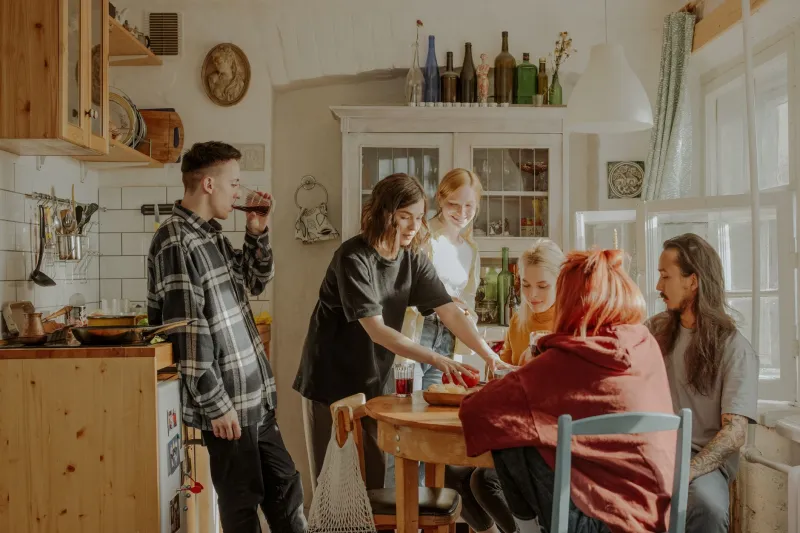
The groups behind these swaps meet wherever there is a hob and a table. A church hall in Bristol. A community centre in Glasgow. A pub back room in Leeds. A Cardiff group has been known to take over a friend’s kitchen for an afternoon of chopping, tasting and arguing about whether a dish needs more salt or simply more patience.
There is no leaderboard. There is a washing-up rota. That tells you most of what you need to know about the tone. People bring dishes they have tested at home, then cook them again in company so others can taste and annotate. The best cards get a ‘tested’ stamp, a date and the initials of whoever made it. The worst get a kind note and a suggestion to reduce the liquid.
Regional tweaks are not a bug. They are the fun. A Yorkshire group might swap in rhubarb where a recipe calls for sharp apple. A Welsh baker might bring Welsh cakes to a scene that clearly expects scones. Someone in the North East will ask whether brown sauce belongs in the glaze. Someone in Norfolk will arrive with apples and a strong opinion. A Glasgow cook might add black pudding crumbs to a topping and refuse to apologise.
The canon supper
The swap cards often end with serving instructions, and this is where the events get really good. ‘Serve with episode four, pause before the betrayal.’ ‘Eat while the quest log is still open.’ ‘Best consumed with a friend who has also read the book.’ These are not throwaway lines. They are part of the recipe.
A canon supper is a meal built around a fictional world, but it is not cosplay with gravy. The focus is on the table. People bring the dish, the card and the context. Newcomers are handed a plate and a short explanation. Nobody expects you to have memorised the lore. They expect you to have an opinion on the seasoning.
Allergies and dietary needs are written onto the cards, too. A coeliac-friendly version of a pie. A vegan swap for a cream sauce. A nut-free version of a fictional sweet. The rule is simple: if you have tested it, write it down. If you have not, say so. Fandom is better when the table has room.
Passing it around
The cards travel by hand, by post and through the odd scanned photo when someone moves cities. A few groups keep a master box at a community venue. Others use a battered tin that gets passed around like a lending library. The physical card matters. A scan is useful. A card with a butter stain and a note saying ‘too much thyme, sorry’ is better.
The swap has become its own small tradition, separate from the source material but devoted to it. Fans are not just saying they love a fictional meal. They are cooking it, testing it, adapting it for a British oven and a British shop, then handing the results to someone else. That is fandom you can taste. It is also fandom you can pass around the table, which may be the most devoted thing of all.