Please Hold the Plot: Inside Britain’s Week-Late Watch Circles

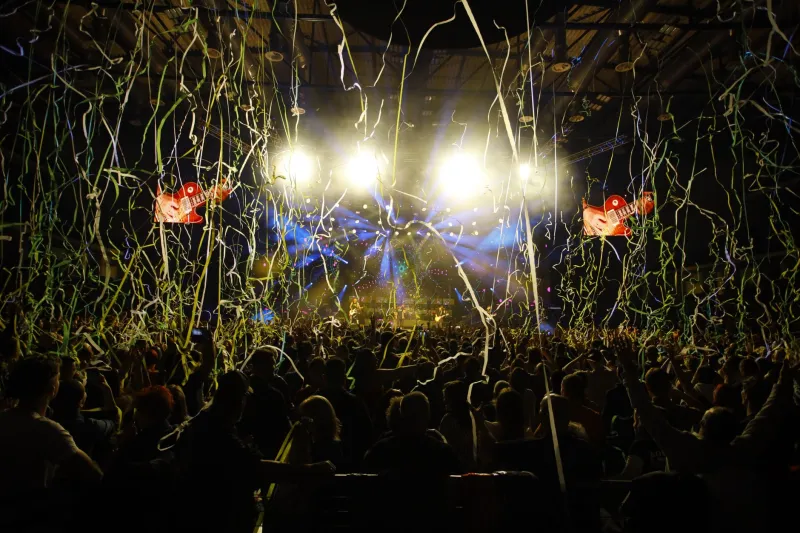
Photo by Photo by Harold Hisona on Unsplash on Unsplash
It is Tuesday night and the group chat is doing something strange. It is not dead. It is not exactly alive either. There is a message that says 'watched yet?' and a reply that says 'Thursday, I promise' and then a stretch of silence that feels almost ceremonial. Nobody is being ignored. Nobody has lost interest. The chat is simply under a spoiler curfew.
In a culture that treats being up to date as a personality trait, there is a quiet corner of British fandom that runs on delay. These are the week-late watch circles: WhatsApp groups, Discord servers and small Telegram chats built around the radical idea that a shared gasp is worth waiting for. They are not anti-hype. They are pro-company. And their rules are some of the most tender bits of etiquette on the internet.
The Emoji Treaty
Every safe chat has a language for danger. In one group, a yellow traffic light emoji means 'I am about to discuss plot, look away'. A red light means 'full spoiler, no mercy, you were warned'. A green light means the coast is clear. In another, the signal is a single word — 'fog' — posted before any message that might give away a death, a kiss, a comeback or a judging decision. The fog lifts when everyone has watched.
It sounds fussy until you have been the person who opened the wrong message at 7am on a bus. The emoji treaty is not about policing excitement. It is about giving excitement a safe container. Fans describe it as a kind of air-traffic control for feelings. You can still land the plane. You just have to check the runway first.
Rules Written in Gossip and Good Faith
The rules are rarely written down in full. They are passed along like family recipes. No plot in the main chat. Use the spoiler thread. Ask before you assume. If you are more than one episode behind, say so at the start of the season and someone will make a note. If you are the one who has watched ahead, you get a temporary nickname — the Time Traveller, the Oracle, the One Who Knows Too Much — and a gentle reminder that your knowledge is a loan, not a gift.
Some groups operate a rolling window. Nothing major gets discussed until Sunday night. Others use a 'two-episode buffer' for dramas that drop weekly, and a full blackout for finale week. One chat has a rule that no one may type the name of a certain character until the following Wednesday, which has led to elaborate workarounds involving nicknames, initials and a drawing of a hat. It is silly. It is also deeply serious.
The Gentle Policing
The enforcement is where these groups show their character. There is no ban hammer, no public shaming, no screenshot-and-pile-on. Instead there is the nudge: a private message that says 'heads up, love, that last one was a bit plotty'. There is the apology ritual: a row of sorry emojis, a promise to be more careful, a joke about being sent to spoiler jail. There is the forgiveness that comes quickly because everyone has been the laggard at some point.
Good admins do invisible work. They pin reminders. They open side threads. They notice when someone has gone quiet and ask, kindly, whether they are still watching or whether life has got in the way. In the best chats, the spoiler curfew is not a rule imposed from above. It is a habit of asking, 'Have you seen it yet?' before saying anything worth saying.
Care, Not Control
The obvious question is whether this is all a bit much. Why not just watch on time? The answer is usually practical. People work shifts. People have kids. People are caring for parents, or studying, or trying to afford a streaming subscription alongside everything else. Some fans are neurodivergent and find weekly appointment viewing stressful. Others simply like to watch with a partner who is away during the week. The curfew is not a judgement on their pace. It is an accommodation.
There is also the matter of the shared gasp. Fandom is full of pleasures you cannot get alone: the group reaction, the theory that lands mid-episode, the collective silence after a cliffhanger. A spoiler does not just reveal information. It removes a future moment of togetherness. The curfew protects that future. It says: your Tuesday is not more important than my Thursday, and our Sunday is worth more than either.
When the Curfew Breaks
It breaks, of course. Someone forgets. Someone gets excited. Someone assumes everyone watched the finale because it was trending. The aftermath is usually more interesting than the crime. There is the scramble to delete. There is the mock outrage. There is the genuine 'I am so sorry, I ruined it' and the reply that says 'you didn't ruin it, I still don't know how it happens'. The group survives because the point was never perfection. The point was care.
What makes the spoiler curfew underrated is that it asks for restraint in a culture that rewards being first. It is fandom as infrastructure: unglamorous, mostly invisible, holding up the thing everyone else enjoys. It is a small act of collective kindness, repeated weekly, in chats with names like 'Sunday Sleuths' and 'The Catch-Up Crew'. And when the last person finally posts 'done', the chat erupts — all at once, gloriously, with no one left behind.
That is the secret. The curfew is not a wall. It is a door held open. And in a country that loves a queue, it turns out we also know how to wait for each other.