The Doorbell Archive: Britain's Bedroom Museums Are Open by Appointment
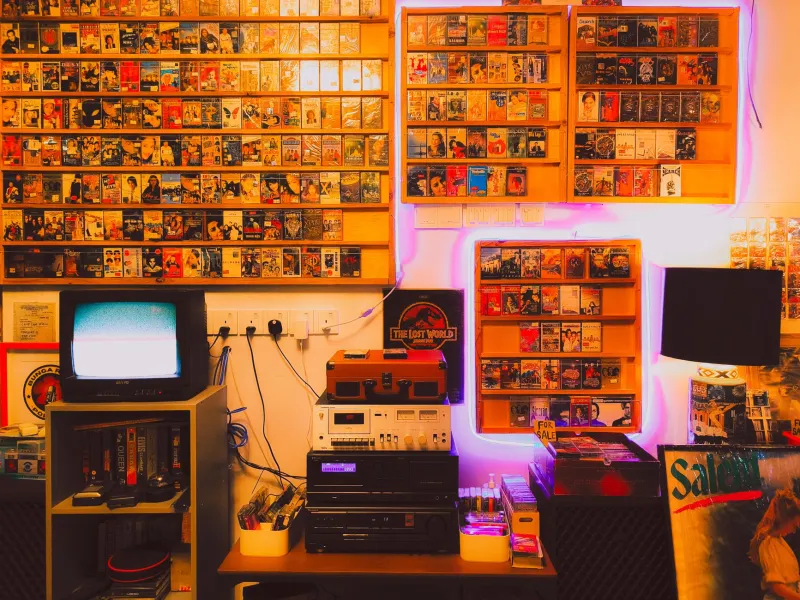
The doorbell is ordinary. The hallway is ordinary. Then you turn left at the airing cupboard and step into a room where every shelf has a label, every label has a date, and every date has a story. This is not a national museum. It is a spare bedroom in a semi-detached house, and its curator has been expecting you.
Across the UK, bedroom-sized fandom shrines are quietly becoming semi-public attractions. They are not advertised with banners or turnstiles. They are passed along by local noticeboards, church newsletters, Facebook groups, heritage open days and the sort of WhatsApp message that begins: 'You know you like railway timetables — my neighbour has a shed.'
The box room with a catalogue
Some collections are devoted to Doctor Who: novelisations in acid-free sleeves, Target paperbacks arranged by number, a shelf of sonic screwdrivers with a small card explaining which era each one represents. Some are railway shrines: old timetables, station signs, platform tickets, a lamp from a signal box that no longer exists. Others are stranger and more specific — ceramic frogs from seaside towns, Bakelite radios, football programmes from one lower-league club, fan-made zines from a scene that ended before the curator was born.
The common thread is not the subject. It is the care. Bedroom curators talk about humidity, UV light and pest control. They use the word 'provenance' without irony. They keep visitor books. They have opinions about how to label a object without making it look like a school project.
How a private collection gets a visitor list
The move from private to semi-public usually happens slowly. A collector mentions a room to a friend. The friend asks to bring someone. Then a local history group asks for a look. Then a notice goes up in a village hall or a post appears in a niche forum, and suddenly there is an appointments diary.
Most of these visits are free, though some collectors ask for a donation to a local charity or a contribution towards the electricity bill. The transaction is not really financial. It is social. Visitors bring biscuits, or a spare copy of something, or just the willingness to listen. They sign the visitor book. They write things like 'made my year' and 'my dad had one of these'.
The visitor book is the point. It turns a personal obsession into a record of other people's memories. A collector can tell you exactly which shelf a stranger cried at.
The etiquette of being a guest
There is an unwritten rulebook, and it is mostly about remembering that you are in someone's home. Arrive when invited. Do not bring extra people. Do not touch unless invited. Ask before taking photographs. Do not post the location unless the curator says you can. Do not treat the room like a shop, a storage unit or a test of the owner's knowledge.
The last one matters. A bedroom museum is not a pub quiz. The curator may know more than you, or less than you, or care about different corners of the same fandom. The generosity is in the opening of the door, not in proving that you know the exact broadcast date of a missing episode.
And leave when the visit is over. A collection can be shared without becoming a public service.
The cost of opening the door
Opening a spare room to strangers is an act of trust, and trust has overheads. There is insurance to think about, and accessibility, and the simple fact that a collection in a box room is not designed for a coach party. Some curators stop after a difficult visit. Others set firm limits: two visitors at a time, no children, no filming, no visits during winter.
In 2026, the responsible version of this trend looks less like a tourist attraction and more like a neighbourhood arrangement. It works when the curator keeps control, when visitors arrive with manners, and when everyone understands that the collection belongs to one person first and the community second.
Why the door keeps opening
Britain has always had a soft spot for private passions that outgrow their shelves. The bedroom museum is just the latest version: a box room turned into a love letter, with a visitor book by the door. It is fandom at its most domestic and its most generous.
The doorbell rings. The curator puts the kettle on. The visitor book comes out. For an hour or two, a spare room becomes the smallest museum in Britain — and somehow exactly the right size.