Playbills in the Rain: The Unwritten Rules of Britain's Stage-Door Regulars
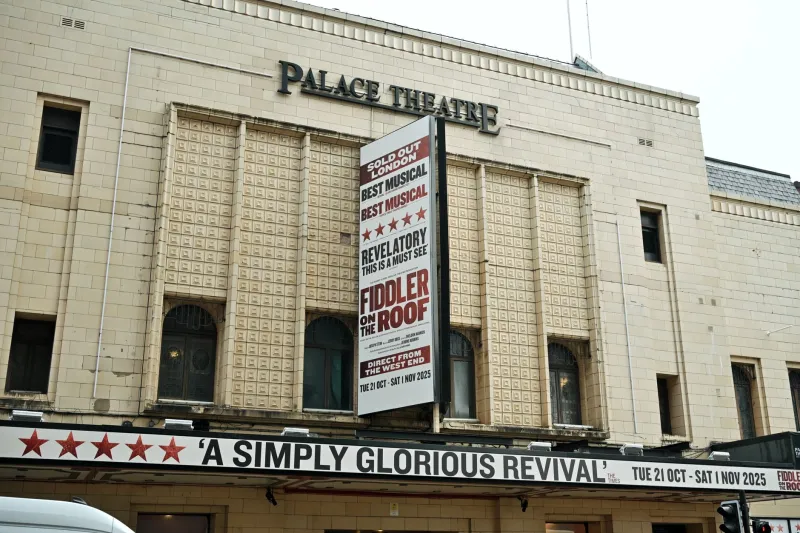
There is a particular kind of hush that falls outside a British theatre at ten past ten. The audience has spilled out, the bars are cashing up, and the street is emptying — except for one corner. By the stage door, a loose cluster of people stand in the drizzle, programmes held flat against their coats, biros clicked ready. They are not there to catch a star. They are there to finish the show.
The second performance
Stage-door culture is often framed as celebrity-chasing, but spend an evening with the regulars and a different picture emerges. The wait is a ritual of gratitude, a chance to say thank you to the people who made the thing you loved. It is also, quietly, a fan community in its own right — one with its own language, its own etiquette and its own geography.
"It’s the bit after the bit," says Priya, a regular at the Nottingham Playhouse who has been waiting by stage doors since she was a teenager. "The curtain comes down, but the evening isn’t over. You get to talk to the person who made you cry in act two. That’s not chasing fame. That’s closing the loop."
The ritual has deep roots in British theatre. Long before social media, fans queued at stage doors with programmes and postcards, hoping for a signature and a moment. What has changed is the scale and the community around it. Regional theatres — Sheffield Crucible, Leeds Playhouse, Birmingham Rep, the Royal Exchange in Manchester — have quietly become hubs for this after-hours fandom, with regulars who know the stage-door keepers by name and the best spot to stand out of the wind.
The etiquette of the wait
There are rules, and they are mostly unwritten. The first is simple: you are a guest. The stage door is a workplace entrance, not a red carpet. Regulars know to keep the pavement clear, to respect the runners and security staff, and to accept a polite "not tonight" without sulking.
The second is the one-item rule. Bring one programme, one poster, one playbill. A bag of memorabilia is a queue-stopper, and the queue — such as it is — is a shared resource. "You see people with carrier bags and you just know they’re going to hold everyone up," says Tom, a West End regular who has a drawer of signed programmes at home in Croydon. "The point is the moment, not the haul."
The third is the pen. Always the pen. A biro that works, with a cap you can hold in your teeth. Regulars carry spares. They also carry a certain kind of patience: the understanding that actors are tired, that a show can run long, that some nights the stage door stays shut.
And the fourth, perhaps the most important, is the story. The best stage-door encounters are not about the signature. They are about the sentence you say when you get there. "I loved the second act" is fine. "The bit where you paused before the line about the harbour — that was the whole play for me" is better. Regulars learn to be specific. Specificity is a form of respect.
A community beyond the auditorium
The stage door has also become a place where fans look after each other. In Sheffield, a loose group of regulars swaps spare programmes and compares notes on which nights are busiest. In Edinburgh, during the festival, the stage-door queue becomes a multilingual, multi-generational affair, with first-timers coached by old hands. In London, the long wait outside a West End house can turn into a small seminar on the play’s history, led by someone who has seen it four times.
Regional theatres have noticed. Some now run informal "stage door nights" or post-show Q&As that fold the after-show ritual into the building itself. Others simply make sure the stage-door area is lit, safe and clearly signed. It is a small thing, but it signals something important: the audience is not an inconvenience. The audience is part of the show.
"The theatre is a community building," says Marcus, a stage-door regular in Bristol. "We just happen to use the back entrance. The people who wait are the ones who can’t quite let go of the evening yet. That’s not sad. That’s devotion."
Why the playbill matters
The playbill — or programme, depending on where you are — is the artefact at the centre of it all. It is cheap, flimsy and almost always creased by the end of the night. It is also a record of presence. A signature turns it into evidence that you were there, that you waited, that the show happened to you.
For younger fans, the playbill is often the first piece of theatre memorabilia they own. For older regulars, it is a collection that maps a life: a decade of shows, a shelf of signed covers, a reminder of the nights that mattered. The stage door is where that collection gets its final, human stamp.
The quiet close
By half past ten, the crowd has thinned. The last few signatures are given, the last few thank-yous said. The stage-door keeper locks up. The regulars drift towards the bus stop or the tube, programmes tucked inside coats against the rain.
It is not a glamorous ritual. It is often cold, occasionally disappointing and always a little awkward. But it is also a way of being devoted — to a play, to a performance, to the strange collective act of making a show happen eight times a week. The curtain call is for the cast. The stage door is for the rest of us.