The Twelve-Seat Rule: Why Britain’s Most Devoted Film Fans Are Building Cinemas at Home
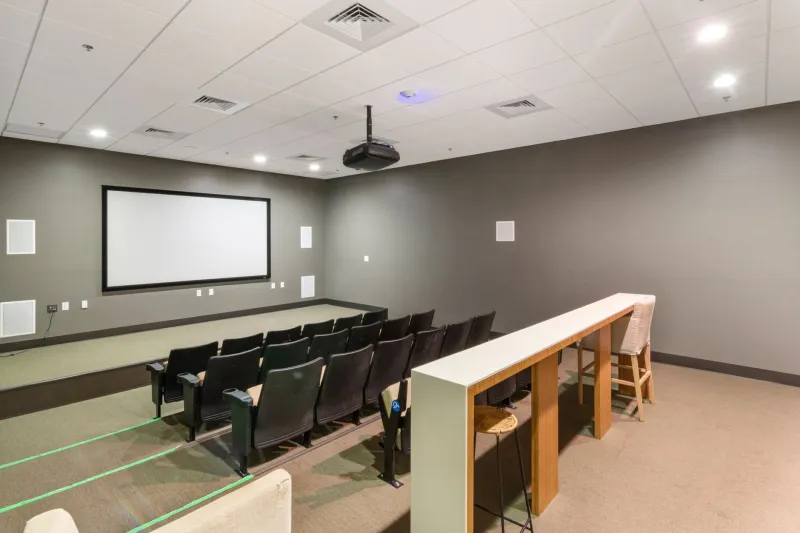
On a wet Tuesday in Sheffield, twelve people take off their shoes, add their phones to a bowl by the door and settle into folding chairs arranged with the precision of a wedding plan. The screen is a painted wall. The projector sits on a shelf between a box of Christmas decorations and a stack of DVD commentaries. Someone has printed a programme. Someone else has brought flapjack. This is not a cinema in the conventional sense. It is a spare room that has been persuaded, very gently, to become one.
Across the UK in 2026, these micro-cinemas are quietly multiplying. They are in garages in Leeds, back rooms in Bristol, tenement flats in Glasgow and converted sheds in rural Wales. Capacity tends to hover between eight and twenty. Tickets are often hand-stamped, not scanned. Snacks arrive on a tray during a scheduled interval. And the audiences are not casually dropping in: they are devoted, booked in advance and expected to behave as if they are guests in someone’s home, because they are.
The twelve-seat rule
The first thing to understand about the spare room cinema is that the smallness is not a limitation. It is the point. A twelve-seat room creates a different social contract from a two-hundred-seat auditorium. You cannot slip in late and hope nobody notices. You cannot whisper through the quiet bits. You cannot leave a stranger’s coat on the floor and disappear into the crowd. Everyone is, in the nicest possible way, accountable.
Hosts talk about the number twelve the way football fans talk about a formation: it is enough to feel like an audience, but small enough to remain a conversation. A room of twelve can laugh together without the laughter becoming a roar. It can gasp at the same plot twist without the sound turning into a communal shriek. It can argue about the ending afterwards without splitting into factions. The Devoted knows the appeal of a loud passion, but there is something powerfully loud about a room that has agreed to pay attention.
The kit is deliberately ordinary
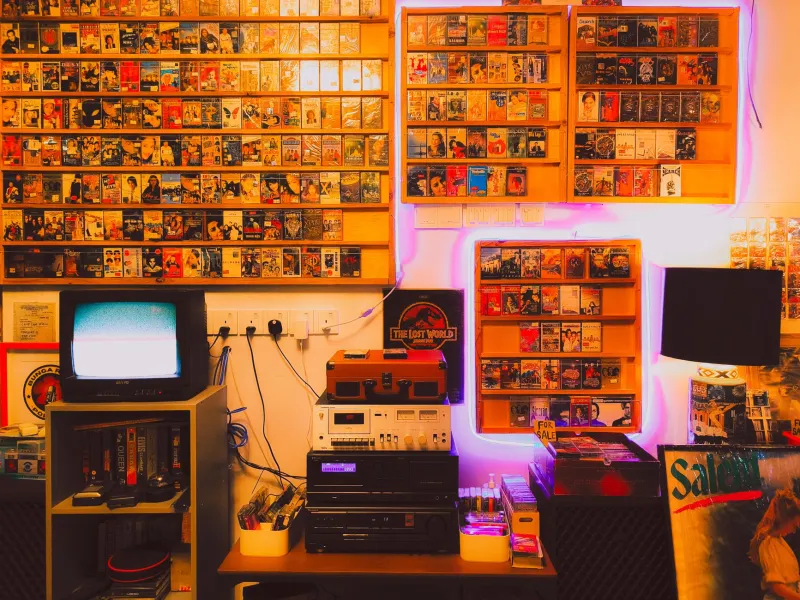
The technology is rarely the star. Most hosts are running a modest projector, a blackout blind, a soundbar and a reliable HDMI switcher. Some still use a DVD or Blu-ray player because the commentary track matters. Others have a hard drive full of cult television, carefully catalogued. The picture is good enough. The sound is decent. The important equipment is the spare blanket, the extension lead and the sign on the door reminding people not to lean on the projector table.
This is not about recreating the IMAX experience in a terrace house. It is about removing the friction that stops friends from watching the strange, difficult, beloved thing together. In a multiplex, a cult film can feel like a test of patience. In a back bedroom, with the right six people and a proper interval, it feels like a club meeting. The ordinary kit keeps the barrier low. Anyone with a spare wall and a stubborn streak can have a go.
Tickets, intervals and other sacred rituals
The rituals are what turn a room into a venue. Hand-stamped tickets are common: not because anyone is checking for forgeries, but because a stamp makes the evening feel like an occasion. Programmes are printed with running times, a short note from the host and perhaps a warning about flashing images. There is often a bowl of sweets, a pot of tea and a strict no-shoes-on-the-rug policy. The interval is non-negotiable. It gives people a chance to refill, stretch and say the thing they have been desperate to say since the opening credits.
Some hosts run themed snacks. Others keep it simple: crisps, something homemade, a jug of squash. The point is not hospitality as performance. It is hospitality as punctuation. The interval tells everyone that this is not a passive stream; it is an event with a beginning, a middle and a chance to put the kettle on.
Neighbourly diplomacy
Then there is the diplomacy. A spare room cinema in a British terrace or flat comes with neighbours attached, and sound travels in ways that can surprise even the most careful host. Experienced organisers schedule matinees, invite the people next door, warn them in advance and keep the bass modest. Some have invested in acoustic panels. Others rely on a thick curtain, a rug and the ancient art of asking nicely.
Most of these screenings are private, invitation-only and free, which keeps them firmly in the realm of hosting rather than commerce. Hosts are careful about capacity, fire safety and access. A room with twelve seats still needs a clear route to the door. The charm of the micro-cinema depends on it feeling safe, not chaotic. The best hosts are not just film fans; they are quietly competent event managers with a good line in polite notices.
Why twelve beats two hundred
So why are devoted audiences choosing the back bedroom over the big screen? Partly because curation beats algorithm. A host who programmes a season of cult films, obscure television or a director’s deep cuts is offering something more personal than a listings page. Partly because the room creates memory. You remember who sat next to you. You remember the argument in the interval. You remember the moment the projector fan became part of the soundtrack.
And partly because fandom, at its best, is a form of hosting. It is saying: I love this thing, and I want you to love it in the same room, with the same biscuits. The spare room cinema is not a rival to the multiplex. It is a reminder that scale is not the same as intensity. Twelve seats can hold an enormous amount of devotion.
The limits are real. Hosts burn out. Rooms are not always accessible. Cliques can form. Nobody is getting rich. But the model is not trying to scale. It is trying to gather. In a year when so much of culture is delivered on demand, the most devoted audiences are choosing a stamped ticket, a scheduled interval and a folding chair in someone’s spare room. The projector is just the pretext. The cinema is the people who turn up.